When Blockchains Cannot Talk to Each Other
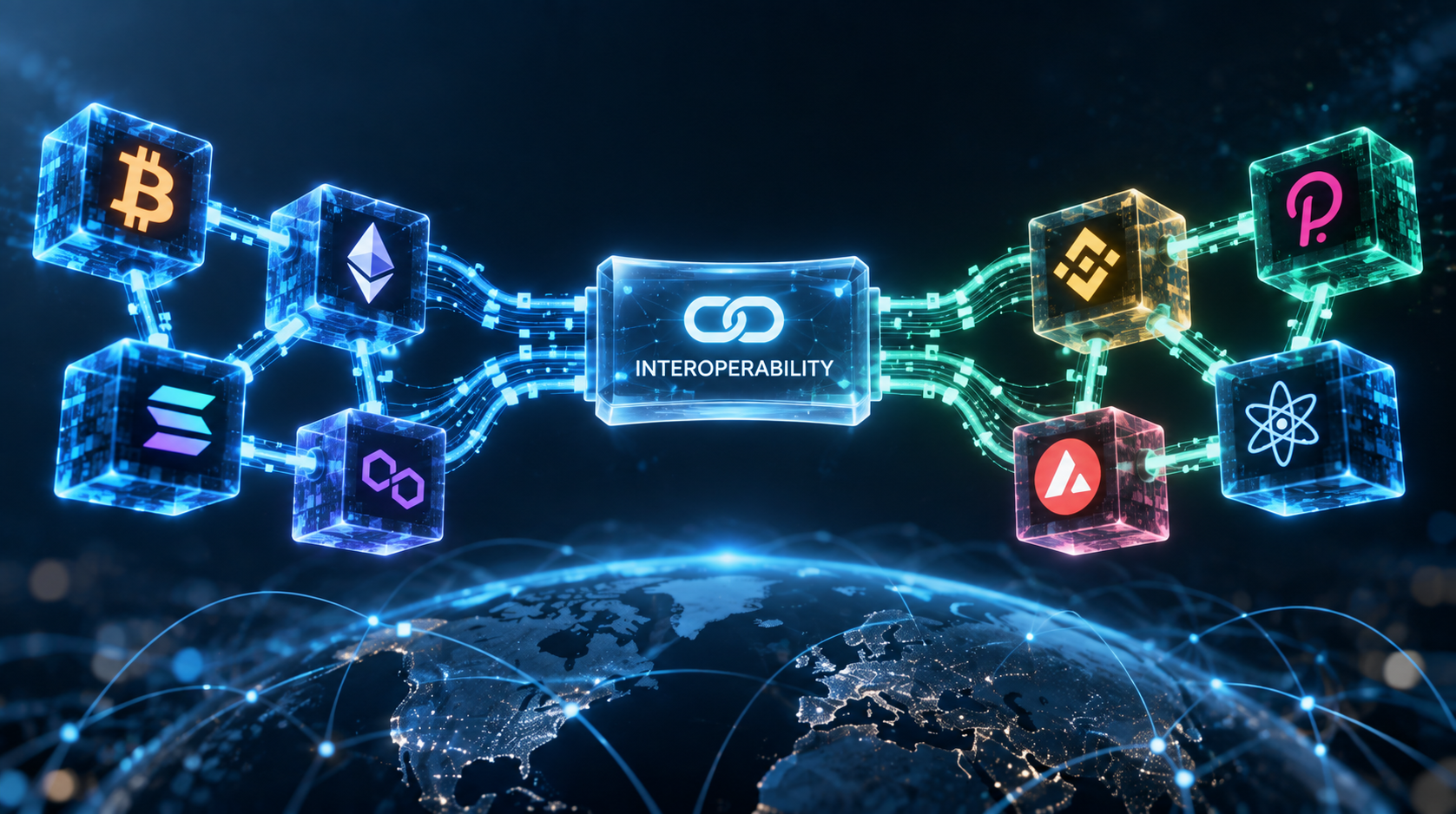
The Next Blockchain Challenge May Not Be Building More Blockchains — It May Be Connecting the Ones That Already Exist
Imagine two organisations using two completely different blockchain networks.
Both systems work correctly.
Both maintain their own records.
But when information needs to move between them, the problem begins.
This is the blockchain interoperability challenge.
Different networks may use different architectures, consensus mechanisms, cryptographic methods, data structures and governance models. Research on inter-blockchain communication identifies these differences as major technical barriers to reliable interoperability.
Why One Blockchain Cannot Simply Read Another
A blockchain is not just a database.
It has its own rules for determining what is valid.
Consider:
Blockchain A → Blockchain B
Blockchain B cannot simply assume that a message from Blockchain A is genuine.
It needs some mechanism to verify that:
- The event actually happened.
- The event was finalised.
- The information was not changed.
- The source network can be trusted for that particular purpose.
The Interoperability Layer
A practical architecture may look like:
Blockchain A → Verification/Interoperability Layer → Blockchain B
This layer can monitor events, verify proofs and communicate the required information between networks.
Research into private blockchain interoperability has explored designs involving smart contracts, off-chain components, monitoring services and verification mechanisms.
Why This Matters in the Real World
Consider a supply chain.
A manufacturer may use one blockchain.
A logistics provider may use another.
A customs system may use a government platform.
A warehouse may use its own enterprise system.
If these systems cannot communicate, organisations still need manual reconciliation.
The technology has solved the trust problem inside each network but not between networks.
Interoperability Is More Than Data Transfer
Simply moving information between blockchains is not enough.
The receiving system needs to understand:
Who issued the information?
What does the information mean?
When was it finalized?
What security assumptions were used?
Who is responsible if something goes wrong?
This makes interoperability both a technical and governance problem.
The Future of Connected Blockchains
As organisations adopt different blockchain platforms, interoperability could become one of the most important infrastructure challenges.
The future may not consist of one universal blockchain.
Instead, it may involve many specialised networks connected through trusted interoperability layers.
The real goal is simple:
Different systems should be able to communicate without forcing every participant to abandon the system they already use.